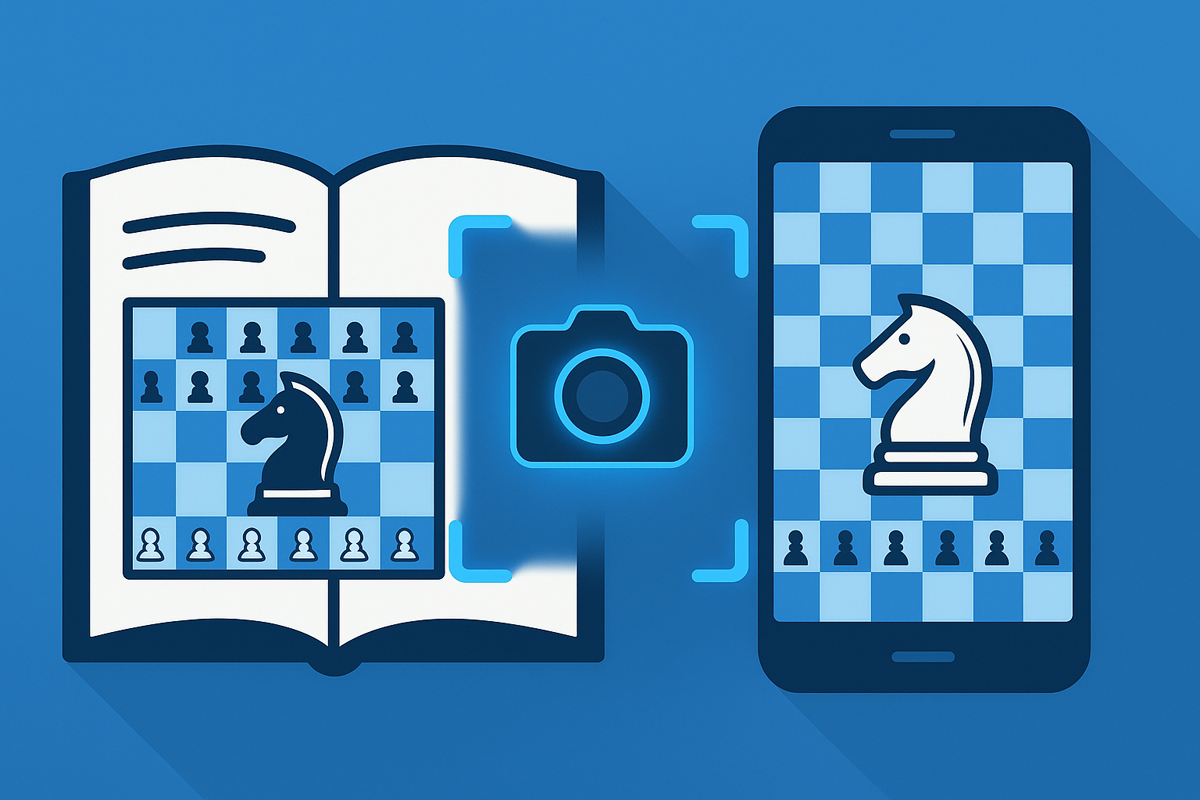
Beyond ChatGPT Chess: Building the Ultimate Chess Analysis App
Why ChatGPT Can't Play Chess (And How We Fixed It)
The Problem: LLMs Are Terrible at Chess
I spent years trying to get decent chess analysis from ChatGPT and similar models. The harsh reality? Even GPT-5 struggles to maintain a game of chess.
Ask ChatGPT to play out a position and you'll get nonsensical moves that violate basic chess rules. The model simply doesn't have the pattern recognition or forward-thinking capability that chess demands. It's a language model pretending to understand positional logic—and it fails spectacularly.
The problem is fundamental: language models aren't designed for spatial reasoning or chess engines. They're designed to predict text sequences. Chess requires both.
The Breakthrough: Hybrid Analysis
After countless experiments, I discovered something that worked: give ChatGPT the raw data it actually needs.
Instead of asking ChatGPT to evaluate a position from scratch, I tried:
- Convert the board to FEN notation (the universal chess position format)
- Get Stockfish's objective analysis (best moves, evaluations, tactical threats)
- Feed both to GPT with a focused prompt
The results were night and day.
With just the position? ChatGPT would hallucinate moves or miss critical tactics.
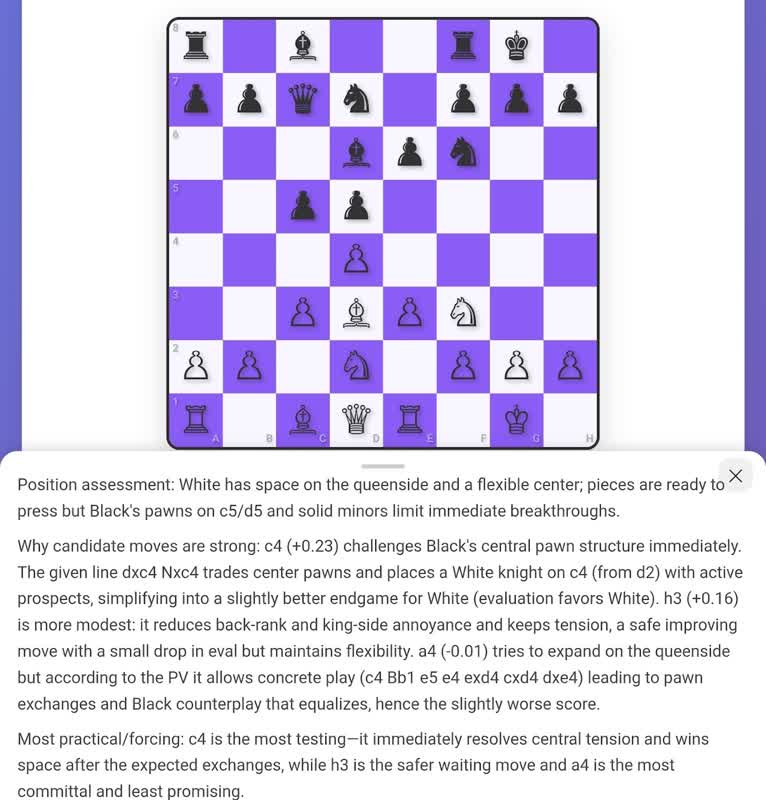
With FEN + Stockfish data + context? GPT provided coherent reasoning about candidate moves, explained the strategic implications, and highlighted tactical nuances that pure engines miss.
It was like giving ChatGPT glasses so it could actually see the board.
From Theory to App: Computer Vision + AI Analysis
Reading FEN notation from a chess book or chess.com screenshot manually defeats the purpose. So we built the next layer:
Computer vision that converts real chess boards into playable positions.
Our app does this:
- Photograph or upload any chess position (physical board, screenshot, book)
- Computer vision model recognizes piece placement and converts it to FEN
- Stockfish engine runs instant analysis (best moves, evaluations)
- GPT layer provides human-readable strategic insight
- You get both tactical precision and human understanding in seconds
No typing FEN codes. No memorizing algebraic notation. Just point and play.
Current Status: Early Stage, But Working
There's still more experimentation ahead—better piece recognition, faster analysis, deeper integration with opening databases. But the core workflow is solid and ready to use.
If this sounds useful, download the app on Google Play and try it with your own positions.
Scan a position from a tactics book. Upload a screenshot from chess.com. Our CV model converts it to a real board, and you can instantly ask GPT for analysis. See how the hybrid approach handles your toughest positions.
We're iterating based on feedback, so try it out and let us know what works and what doesn't.
Why This Matters
Too many chess apps give you either:
- Pure engines (strong but opaque—why is this the best move?)
- Pure AI commentary (creative but unreliable—the move might be illegal)
We built the bridge between them.
The result is analysis that's both tactically sound and strategically insightful. Your feedback helps us get there.
Try It Today
Whether you're studying tactics, analyzing your own games, or just curious how AI sees chess differently: